Horror Story Ideas: 12 Complete Scripts Ready for AI Video
Twelve horror story ideas written as full scripts you can copy directly into Story Into Video — no premise lists, no fragments, every story is a complete narrative ready to film.
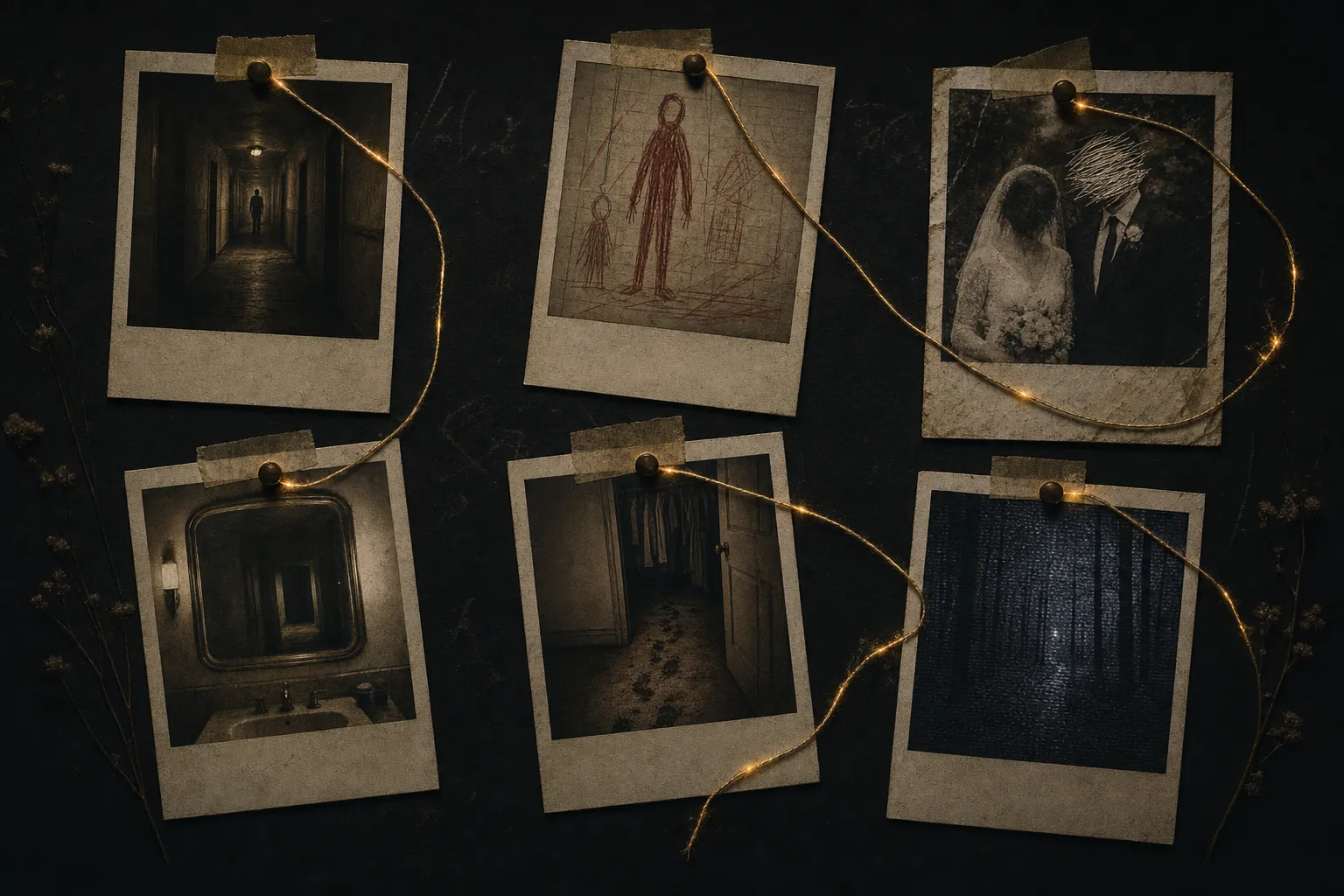
Horror story ideas are everywhere online, but almost none of them are ready to film. The typical list dumps a hundred log-line premises that read like the back-of-the-DVD blurb of a movie nobody made — and then walks away without showing you how to turn any of them into a finished short. Below are 12 horror story ideas written as complete short-film scripts. Every one is a finished narrative, in three short paragraphs, that you can paste straight into the Story Into Video editor and turn into a 30 to 90-second short tonight.
Each script ends with a one-line Key visual — the single frame the rest of the video should lock onto — and a button that copies the whole thing into a new tab on the editor for you, so you don't have to scroll back up and select-all.
Psychological horror story ideas
The threat in psychological horror is internal — there's no monster to render. Just a person whose perception of reality is bending in one small direction, and a camera close enough to notice.
1 — The Slow Mirror
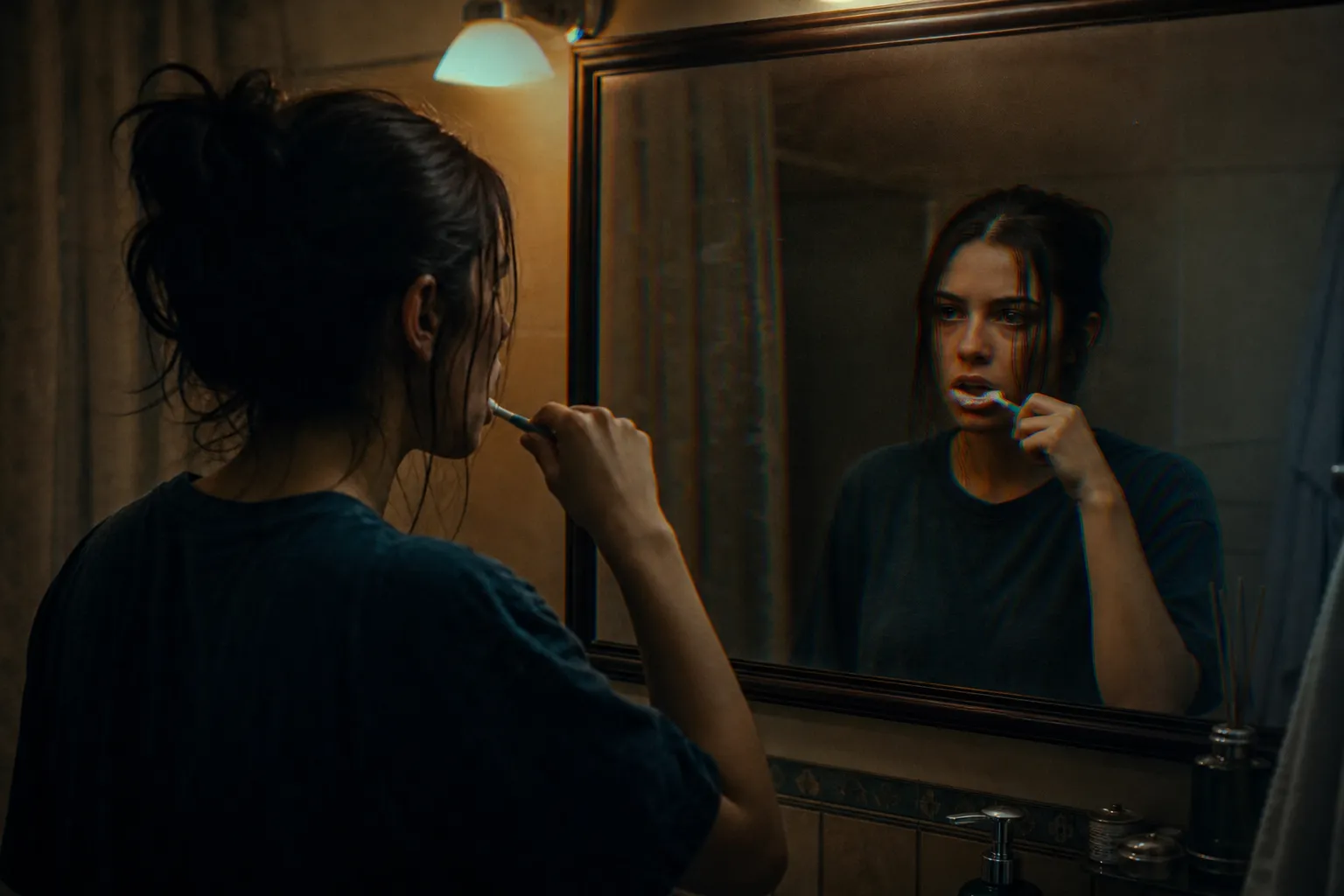
It started on a Tuesday. Sarah was halfway through brushing her teeth when she saw it — a small wrong thing, the kind you'd shake off and forget, if it weren't for the way her reflection's hand paused, just barely, before lifting the toothbrush back to her mouth. Half a second. Maybe less. She watched. Did it again. Same lag.
By the end of the week she was filming her own bathroom every morning on her phone, hand trembling on the lockscreen at 7:02 a.m. before she could bring herself to look at the playback. The gap had widened — half a second became one, became two. On Saturday morning her reflection said the words I'm sorry before Sarah had thought them. She backed out of the bathroom slowly, the way you back out of a room with a snake in it, and for the first time in her life she left the door open.
She slept four hours. At 3:14 she got up and walked back to the bathroom barefoot, because something inside her wanted to know. The reflection was already there, arms folded, watching the doorway she was about to come through. When she stepped in, the woman in the mirror lifted a single finger to her lips. Shhh. And then Sarah — the real one, the one in the room — lifted hers too. Half a second late.
Key visual: a bathroom mirror at 3:14 a.m., two identical women facing each other, one with her finger to her lips, the other just beginning to copy the gesture.
2 — The 3:13 Loop
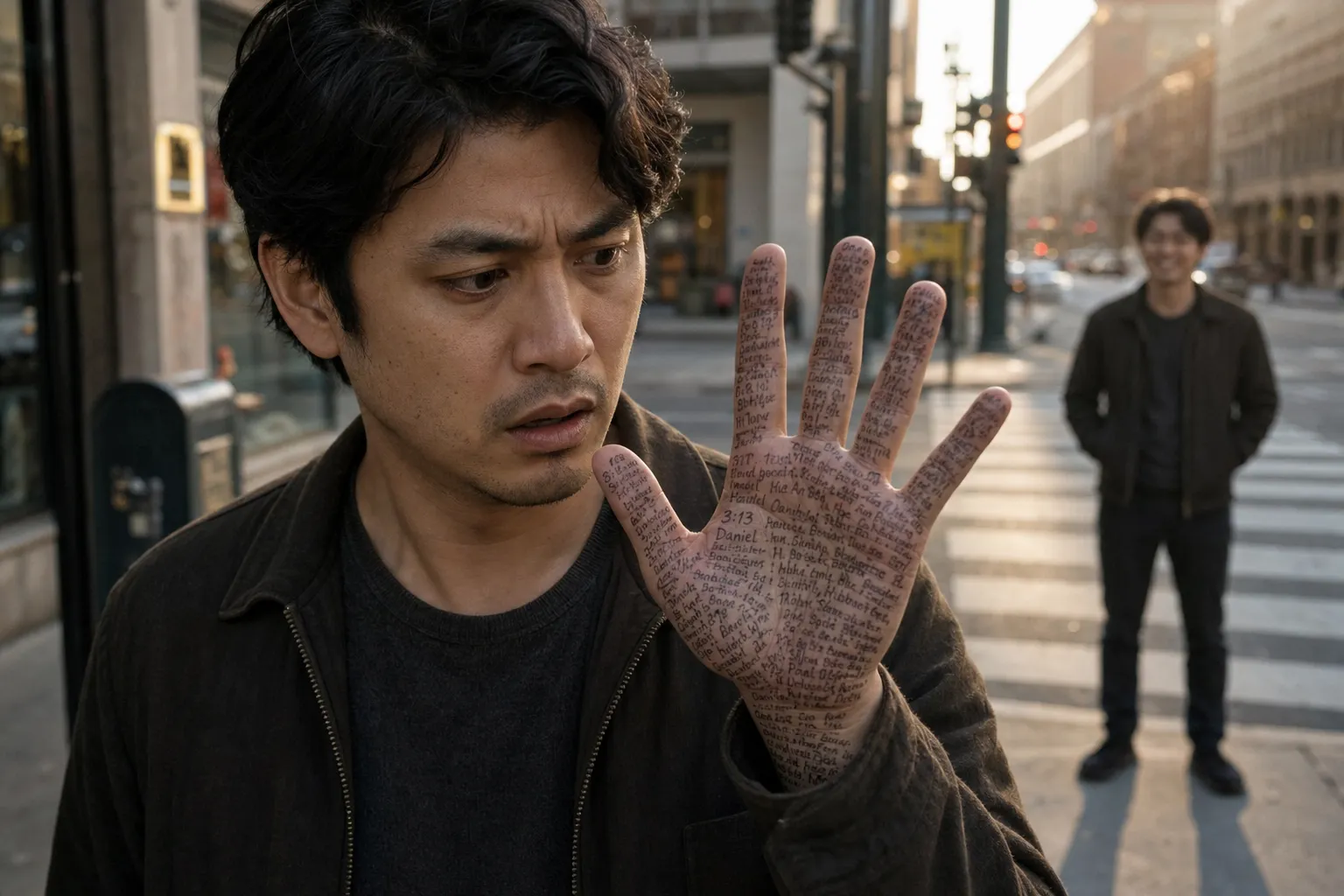
The first three times, Daniel told himself it was stress. He was a tax accountant, it was March, he'd been skipping lunch — there were a hundred normal reasons a man might lose two hours of his afternoon and surface, blinking, at the same crosswalk on Pine and Fifth at 3:13 p.m. with no memory of how he'd gotten there. The fourth time, he started taking notes on his left palm in ballpoint pen.
Two weeks later his palm was a small city of ink. He'd stopped wearing short sleeves. He'd started writing questions to himself between loops: where do you go between 1 and 3? do you eat? do you blink? — and on the way home, comparing the photographs he'd taken at lunch, he realized the notes were answering each other across days. I am still trying. He has not noticed me yet. Don't trust him. That last line was not in his handwriting.
The Tuesday after that, Daniel arrived at the crosswalk at 3:13 and looked down. His palm was clean. The skin was bare. On the other side of the street, wearing his coat and his face, stood a man holding up an open palm of his own — and in fresh black ink across it, the words thank you. The walk signal turned green. The other man stepped off the curb. Daniel did not.
Key visual: a busy urban crosswalk at 3:13 p.m., two men in identical coats facing each other from opposite curbs, one holding up a palm covered in writing.
Supernatural horror story ideas
Supernatural horror works best when you don't see the ghost. You see the room the ghost has just left.
3 — The Bathtub That Fills Itself
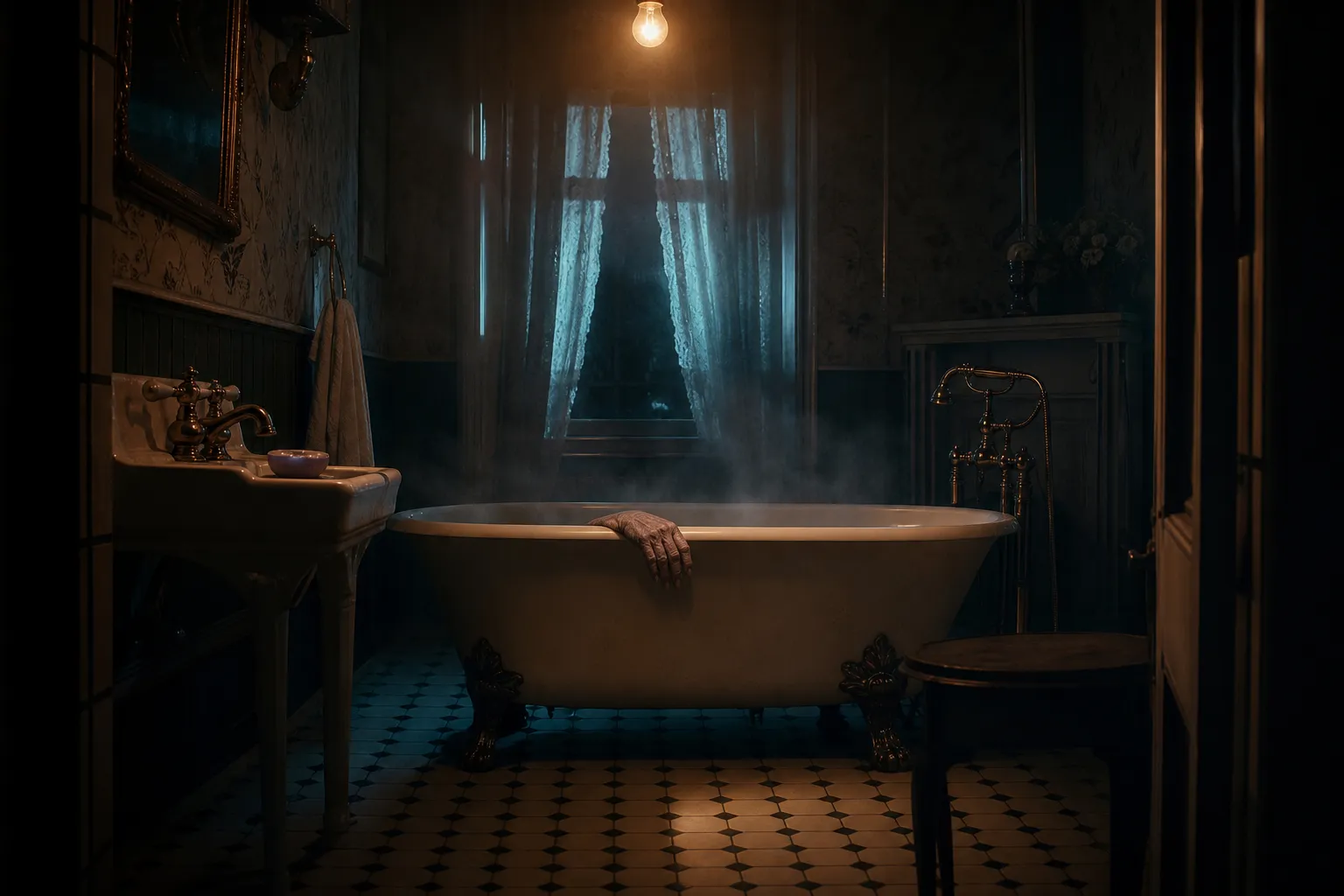
Henry had been living in his grandmother's house for six months when he noticed the bathtub. It was a clawfoot tub, the same one she'd bathed him in as a child, and every night at 11:47 it filled itself. The first night he thought it was a leak. The second night he drained it and stood in the doorway listening for the sound of water and heard nothing at all. The third night he drained it at eleven, locked the bathroom from the outside with a hardware-store deadbolt, and went to bed. At 11:47 the deadbolt opened.
He started measuring the temperature with a meat thermometer. It was body-warm, every night, to the tenth of a degree. He started dropping things in — a coin, a hand towel, a small shaving mirror — and the mirror, when he fished it back out, was reflecting something it had no business reflecting: the ceiling first, then the doorway, then for a moment a face that wasn't his. He threw it all in the trash the next morning and locked the bathroom for a week. Around the seventh day the hallway outside began to smell, very faintly, of lavender — the soap she'd ordered from a shop downtown that had closed twenty years ago.
On the eighth night Henry dragged a kitchen chair into the bathroom at half past eleven and sat next to the empty tub. He waited. At 11:47 the water began, slowly, from below, without a sound. Just before it stopped a hand reached up and patted the rim of the tub, twice — the way she used to pat the cushion next to her on the couch when she wanted him to come sit down.
Key visual: a clawfoot bathtub filling with steaming water in the middle of an empty Victorian bathroom, one wrinkled hand resting on the rim.
4 — The Closet Door That Was Never There
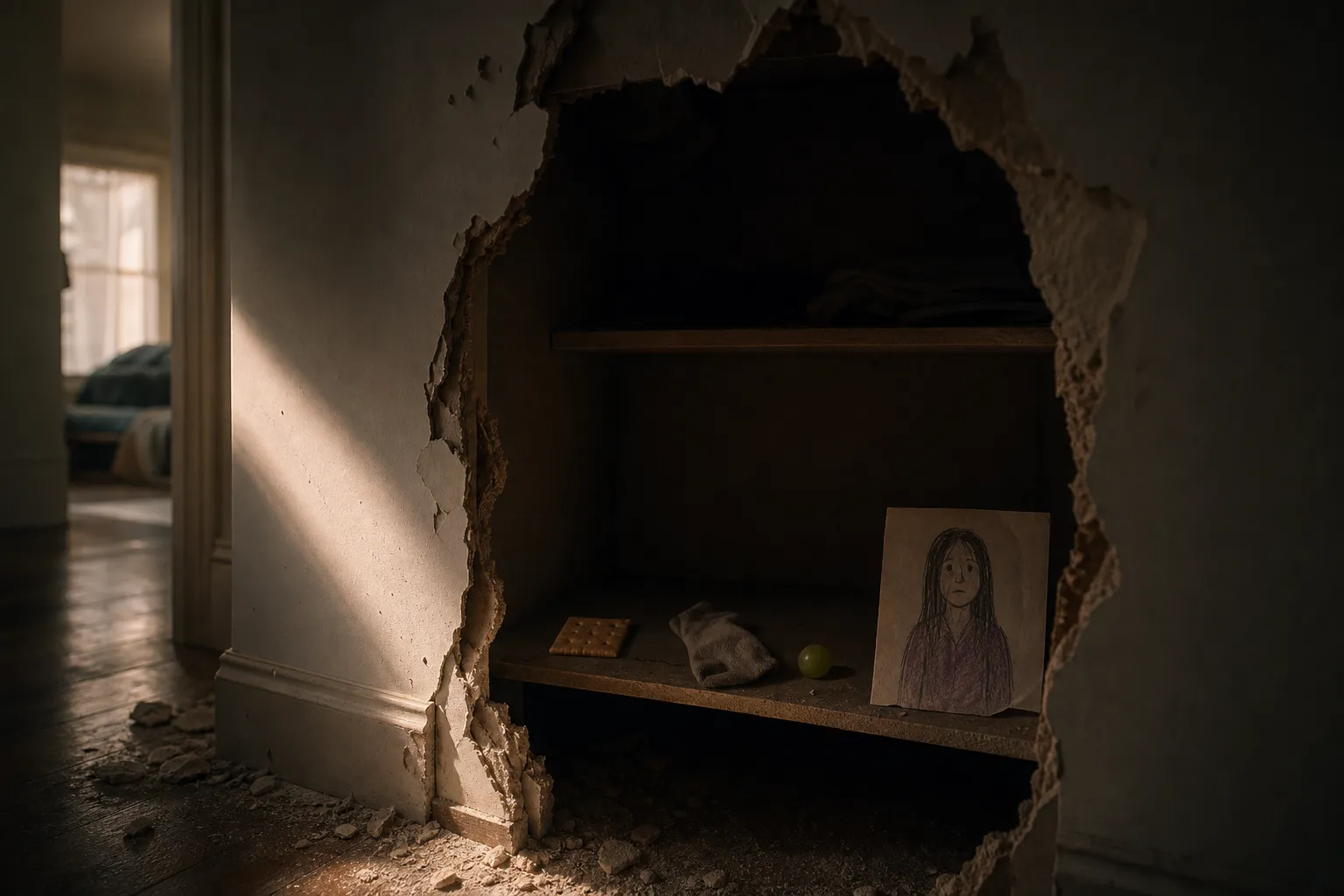
The Garcia family had been in the house three weeks when Lucia, five years old, started saying goodnight to the woman in the closet. There was no closet in Lucia's bedroom. There was a wall, freshly painted, where a previous owner had sealed something off — a smooth patch of drywall that didn't quite match the rest of the room. Both parents tapped the wall, listened for hollows, found none, and decided their daughter was making her new bedroom feel less new.
Lucia started leaving small offerings at the base of that wall. A cracker on Monday. A folded sock on Tuesday. A single green grape on Wednesday. By the end of the second week the offerings were disappearing overnight and her parents, quietly, had stopped pretending to themselves they were the ones taking them. Lucia drew the woman with a stub of crayon: tall, thin, a long dress, no face on her, hands clasped the way you'd clasp them in a wedding photograph. She handed the drawing to her mother and said, without looking up, she likes you the most. She wants me to tell you it's okay.
On a Saturday afternoon Lucia's father took a hammer and made a small hole in the wall. Behind the drywall was a narrow closet — clean, dry, lined with shelves. On the bottom shelf, arranged the way a child arranges things, sat a cracker, a folded sock, a single grape, and a drawing of his wife that nobody in the family had ever drawn.
Key visual: a small dark closet hidden behind drywall, lit by a single beam of afternoon sun, with a neat pile of crackers, a sock, a grape, and a child-drawn portrait at the bottom.
Domestic horror story ideas
Domestic horror lives in the rooms that are supposed to be safe. A kitchen at dawn. A wedding photo on a wall. The harder the room is to leave, the worse it gets.
5 — The Child's Drawing
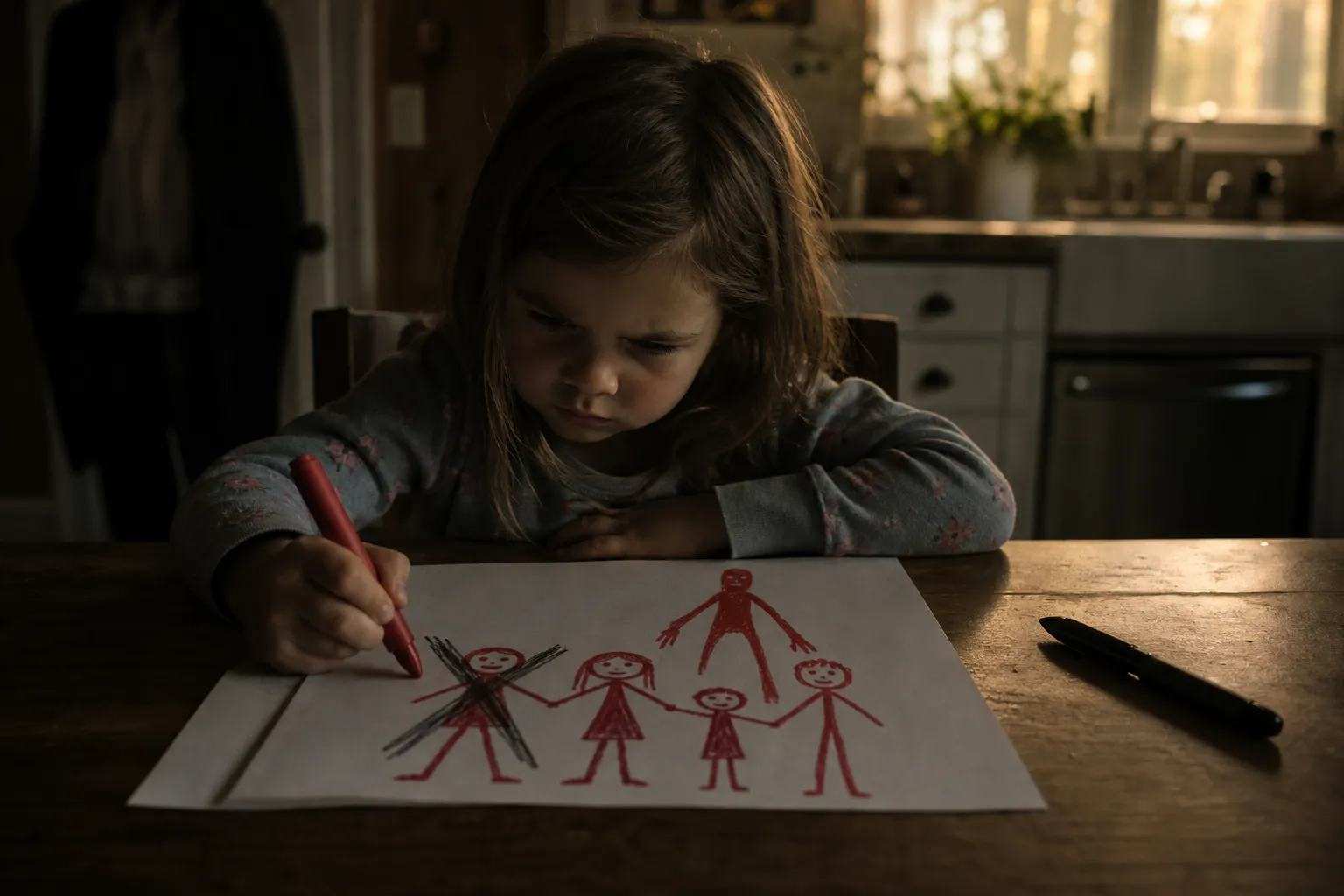
Maya was four years old, and for two months she had been drawing the same red-crayon family portrait at the kitchen table every morning before her parents were fully awake. Mom, Dad, Maya — and behind them, taller than the page, a fourth red figure. Her mother Elena asked her once, very lightly, who that was. Maya didn't look up. She said the one who used to live here, the way you'd say what you'd had for breakfast. The family had moved into the house three months earlier and didn't know any of the previous owners by name.
Elena started keeping the drawings, smoothing them flat into a folder she hid in her sock drawer. The figure was getting closer to the family in each new picture. By drawing twelve he was standing between her and her husband. By drawing nineteen his red arm was around their daughter's small red shoulders. By drawing twenty-six Elena's own red face had been carefully, deliberately crossed out — in black ballpoint pen, with the kind of pressure a child doesn't have. They didn't own a black ballpoint pen. She'd counted the pens in the house twice that week.
She didn't sleep that night. At two in the morning she got up to check on Maya. Maya was sitting up in bed with her eyes open, holding a black ballpoint pen, and the wall above her headboard — bare yesterday — was covered, end to end, in a single careful ink mural of the inside of the house. Every room. Every person sleeping in their bed. Only one figure in the whole picture was awake: a tall thin man in the upstairs hallway, standing very still, looking directly into the closed door of Elena's bedroom.
Key visual: a child's drawing of a family in red crayon, the mother's face deliberately crossed out in black ink, a tall figure with one arm around the child.
6 — The Wedding Photo Facelift
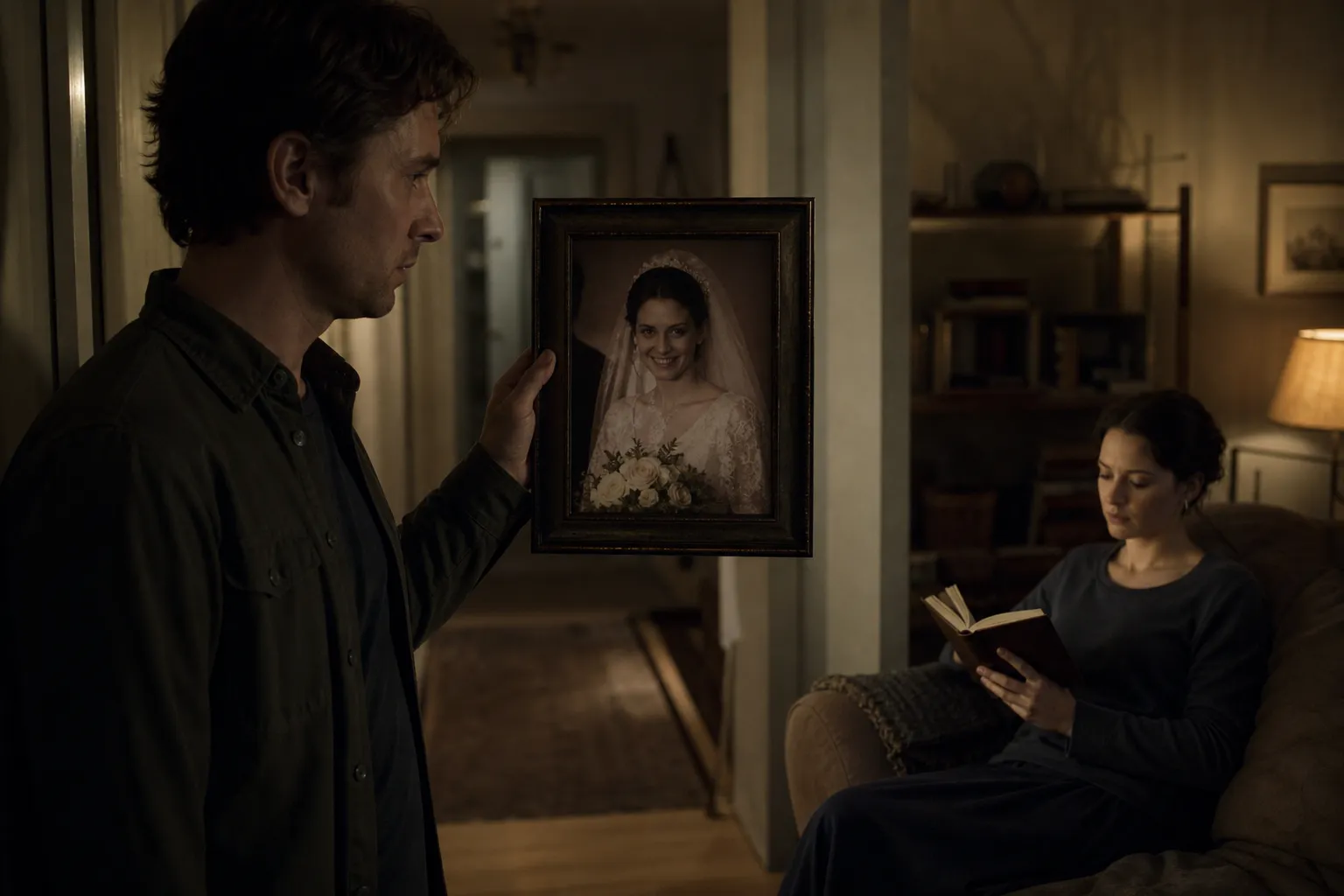
David and Hannah had been married seven years and their wedding photograph hung in the hallway of their apartment in a gilt frame his parents had given them. On a Sunday afternoon David took it down to wipe the dust from the glass and noticed something he could not quite name — the eyes were a little sharper, the mouth a little less familiar, and on the woman's right cheekbone, in the photograph, sat a small dark mole that his wife of seven years had never had. He hung it back up. He didn't mention it.
He started photographing the photograph every Sunday after she left for her run. The face changed by a hair each week. Cheekbones flatter, eyes a half-millimetre wider, hairline drifting up. The mole drifted, too — toward the eye. The Hannah who lived in his apartment did not notice. The Hannah in the photograph was slowly turning into a woman David had never seen. He asked her once, very casually, if she had any of her own copies of it. She'd never owned one, she said. It had always been his.
On the seventh Sunday he took the photograph off the wall and walked into the living room and held it up next to his wife, sitting on the couch reading. The woman in the photograph and the woman on the couch were the same woman now. They were not the woman he had married. Hannah looked up from her book with the smile the photograph had grown over seven Sundays and asked him if he was ready for dinner.
Key visual: a wedding photograph held up next to a wife on the couch, the woman in the photo and the woman in real life slowly converging into a single face that is not the one the husband remembers marrying.
Slasher and stalker horror story ideas
Slasher horror that works on a short doesn't show the threat. It shows the room thirty seconds before the threat arrives, and trusts the audience to bring the rest.
7 — The Babysitter's Checklist
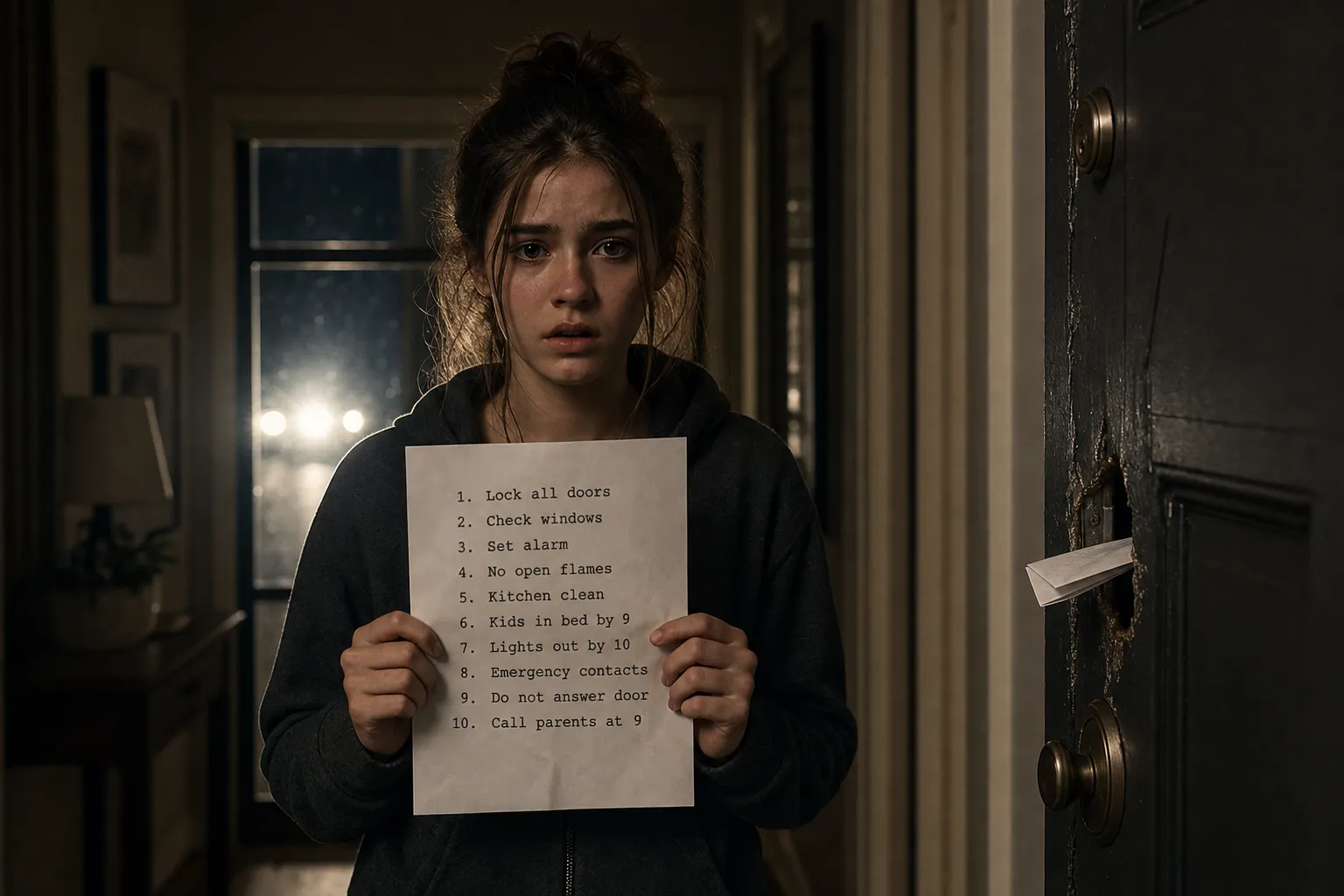
Riley was sixteen, and she had babysat for the Hwang family three Friday nights in a row. On the fourth Friday Mrs. Hwang was in the kitchen when she arrived, wet hands drying on her apron, and she handed Riley a single sheet of paper. Just a little checklist, she said. Things the kids like, things to avoid. She didn't smile while she said it. The list was typed, double-spaced, twelve items long. Item seven was highlighted in yellow: make sure the front door is locked by 9:00 p.m. exactly.
The kids went to bed at 8:30. Riley made herself tea, sat on the couch with the checklist in her lap, and at 8:55 she walked to the front door to turn the deadbolt. The deadbolt did not turn. The metal was sheared clean — the kind of clean cut that takes a tool and a steady hand — and the latch was being held in place, gently, by a small folded square of paper. She pulled the paper out with two fingers. It was a note in the same typed font as the list. This is the front door. The other doors are also like this. Item seven is the only one that matters.
She stood at the front door with the note in her hand and listened. Outside, a car turned into the driveway twenty minutes before the parents were due home, and the headlights swung once across the front window like a lighthouse beam, and somewhere upstairs, very softly, a closet door began to open.
Key visual: a babysitter holding a typed checklist in a quiet hallway at 8:59 p.m., a folded paper sticking out of a broken deadbolt, headlights sweeping across the front window.
8 — The Last Delivery
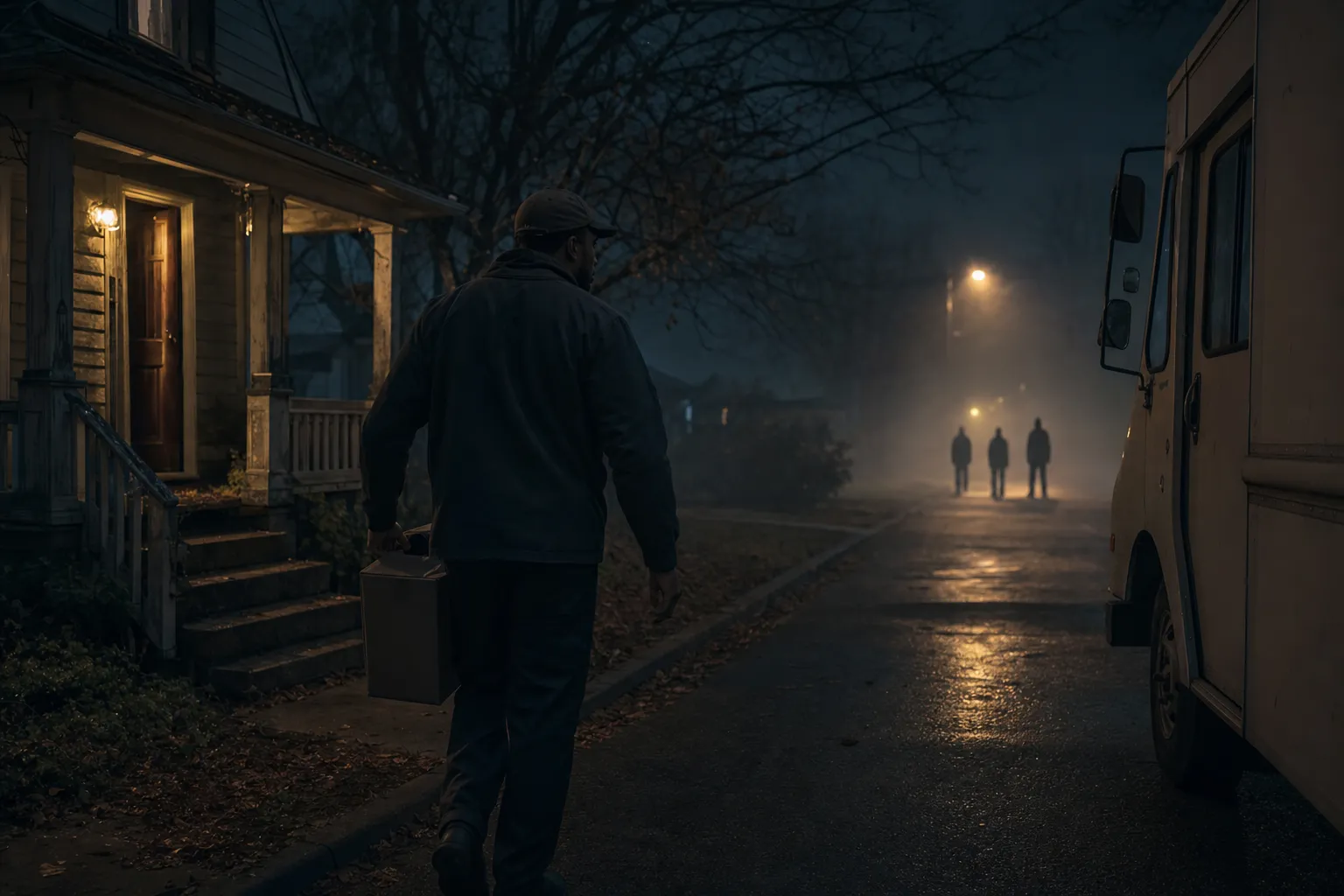
Marcus was the last delivery driver in the city still making rounds twenty-four hours after the broadcasts had gone quiet. He had one package left on the clipboard. The address was a small house at the end of a foggy suburban street, every porch light dark except this one, and as he pulled up he saw that this house's front door was wide open and the porch light was flickering on and off in a slow uneven pattern. He killed the engine and rolled the window down and listened. No dogs. No televisions. No people. He picked the package up off the passenger seat — small, light, addressed in a careful hand to the family.
He walked up the driveway with the package held in front of him like a peace offering. The porch light was flickering in time with something he didn't want to think about — a hand passing in front of it, maybe — but there was no wind, and the trees behind the house were absolutely still. He reached the porch. Through the open doorway he could see the floor: one set of muddy footprints walking in, no footprints walking out. He set the package down on the welcome mat. He turned around.
Three figures were standing at the end of the street under the amber streetlight, exactly where he'd left the truck, and they were not moving. He walked back to the truck calmly, the way you walk past a stray dog. He did not look at them. Behind him, the front door of the house closed by itself. He climbed into the cab, started the engine, and drove. In the rearview mirror the porch light went out at the same moment the package vanished from the mat.
Key visual: a foggy suburban street at dusk, a delivery driver walking back toward his truck, three silhouettes standing at the far end of the road in amber streetlight.
Cosmic horror story ideas
Cosmic horror is dread at scale. It works when an ordinary diner counter is on the same screen as something that is not supposed to exist.
9 — The Diner Under the Cracked Sky
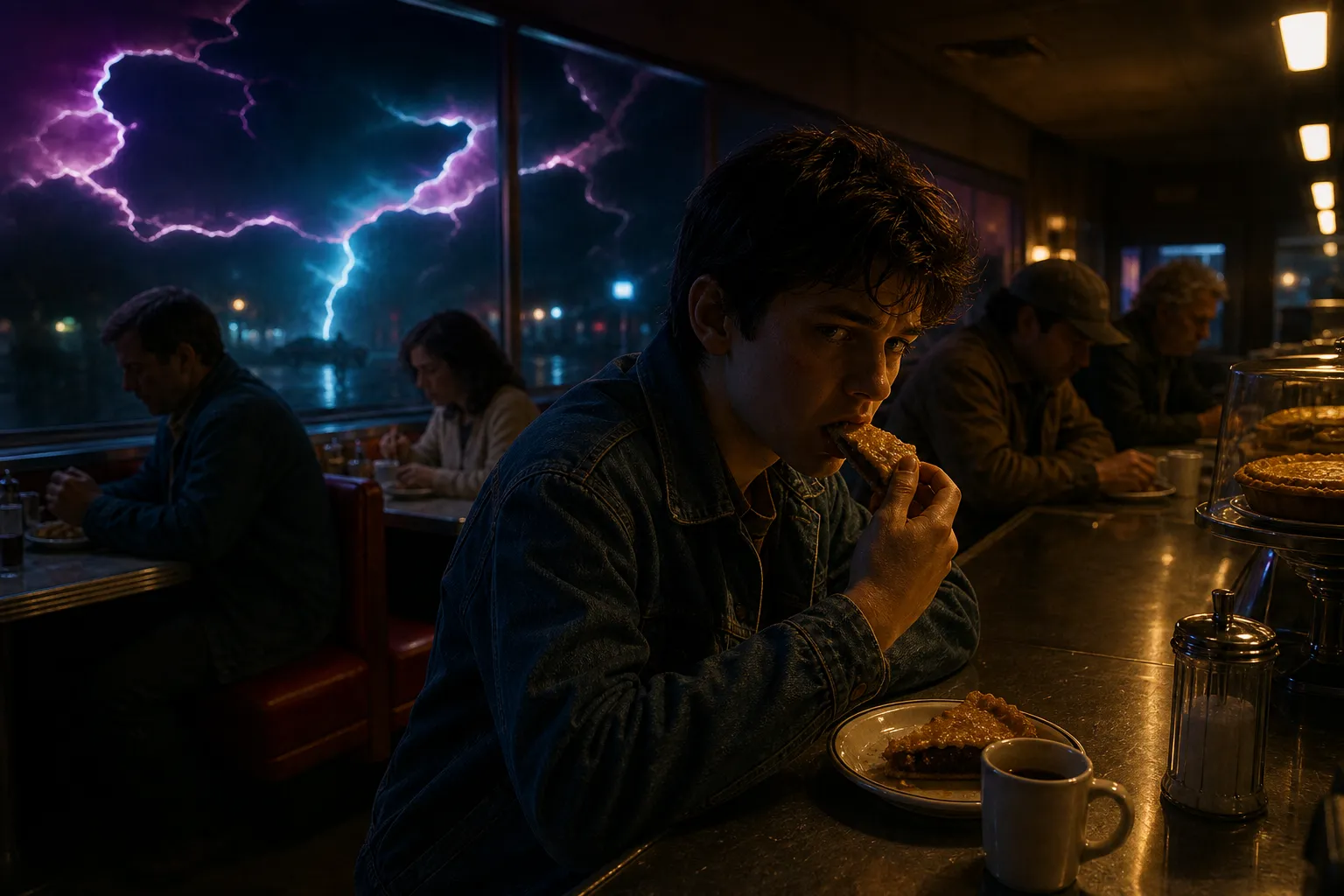
Caleb was sixteen and delivered pizzas for the only place still open after midnight in a small Nevada town. On a Tuesday at two in the morning he pulled his bike into the parking lot of the roadside diner where he always stopped for coffee, and as he kicked the stand down the sky cracked open above him. It cracked in purple and cyan, vivid as a wound, and it spread without any sound at all — no thunder, no wind, no warning. He stood in the parking lot for a full minute staring up. Nothing fell out of it. Nothing came in. He pushed open the door of the diner.
Four customers were eating in complete silence. The television above the counter was playing nothing but static. The waitress — he knew her name, he'd known her his whole life — smiled at him from across the counter and asked if he wanted a slice of pie. He said did you see the sky. She smiled wider and slid a plate of pie across the formica. Sit down, sweetheart, she said. It happens sometimes. None of the other customers looked up.
He sat at the counter and took a single bite. Through the window the crack in the sky was already closing, sealing itself back into ordinary darkness. The static on the TV resolved into a late-night talk show. The customers finished their meals one by one and walked out into a parking lot that looked entirely normal. The waitress refilled his coffee. See? she said. Just an old town thing. Nothing to write home about. And Caleb realized, with the slow uneven heat of the coffee in his hand, that he could not remember ever writing home from anywhere, ever.
Key visual: a 1980s neon-lit diner interior at 2 a.m. with four silent customers eating, a teenager at the counter, a sky outside slowly closing a purple-cyan wound back into ordinary night.
10 — The Book of Names
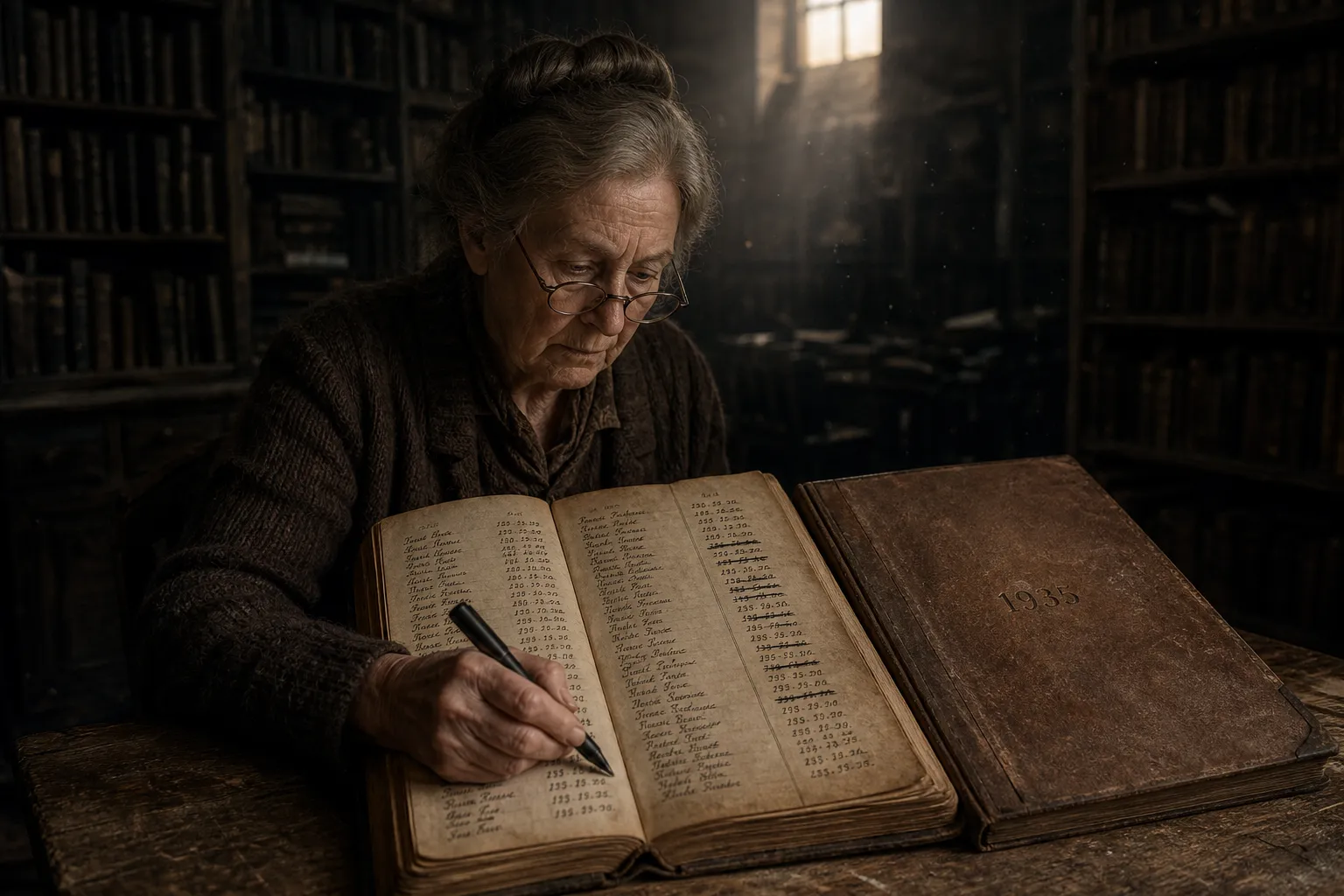
Iris had been a librarian for forty years and she had driven past the abandoned one on the edge of town every single day of those forty years. On a Saturday afternoon in October she finally pulled into the lot, picked the old side-door lock with a hairpin the way her father had taught her, and stepped inside. The shelves were intact. The books were in order. The dust was thick enough to muffle her footsteps. Most of what she found was ordinary — novels, atlases, mid-century children's books — until she reached the back wall, where one shelf held thousands of identical brown leather volumes. Each volume was labeled with a single year.
She pulled down the book labeled with the year of her birth. Inside, in a steady old hand that did not waver from page to page, was a list of every person born that year, in alphabetical order, with two dates beside each name. The first was a birthdate. The second was something else. She turned to the page she expected to find herself on and found herself. Her birthdate was correct. The second date was six days from today. She turned a page backward and forward and found two of her childhood friends, both of them with second dates that had already come and gone.
She did not sleep. On Sunday morning she came back with a fire extinguisher and a box of matches and a thick black marker. She found her book. She found her name. She drew a heavy line through the second date and felt, as she was capping the marker, the very faint sound of a pen scratching new ink somewhere deep in the rows of shelves. When she got home her daughter's name had been written across the front of the mailbox in a hand she had never seen before.
Key visual: a brown leather book open on a wooden library desk, a woman's name printed in steady old handwriting, the death-date column being crossed out by a modern black marker.
Found-footage and twist horror story ideas
Found-footage horror that works on AI video leans into the format's defects — the grain and the camera shake make the model's drift read as real. The twist endings work when the last frame quietly rewrites the rest.
11 — The 1998 Campsite Tape
A 1998 camcorder tape was recovered from a state-park ranger station, sealed inside a Ziploc bag with a label that said, in pencil, watch. The first ninety seconds were ordinary. Two friends — Aaron and Ben — were pitching a tent in a clearing as the sun went down, joking about which of them snored louder, beer cans cracked open on a fallen log. Aaron set the camera on the log and walked out of frame to gather firewood. Ben sat down beside the camera and zipped up his jacket.
He called Aaron's name once. There was no answer. He called again. He waited, listening, for the better part of a minute, and then he stood up and walked past the camera and into the dark line of trees where his friend had gone. The camera kept rolling, alone on the log, for eight more minutes of empty campsite. The wind moved the tent flap once and stopped.
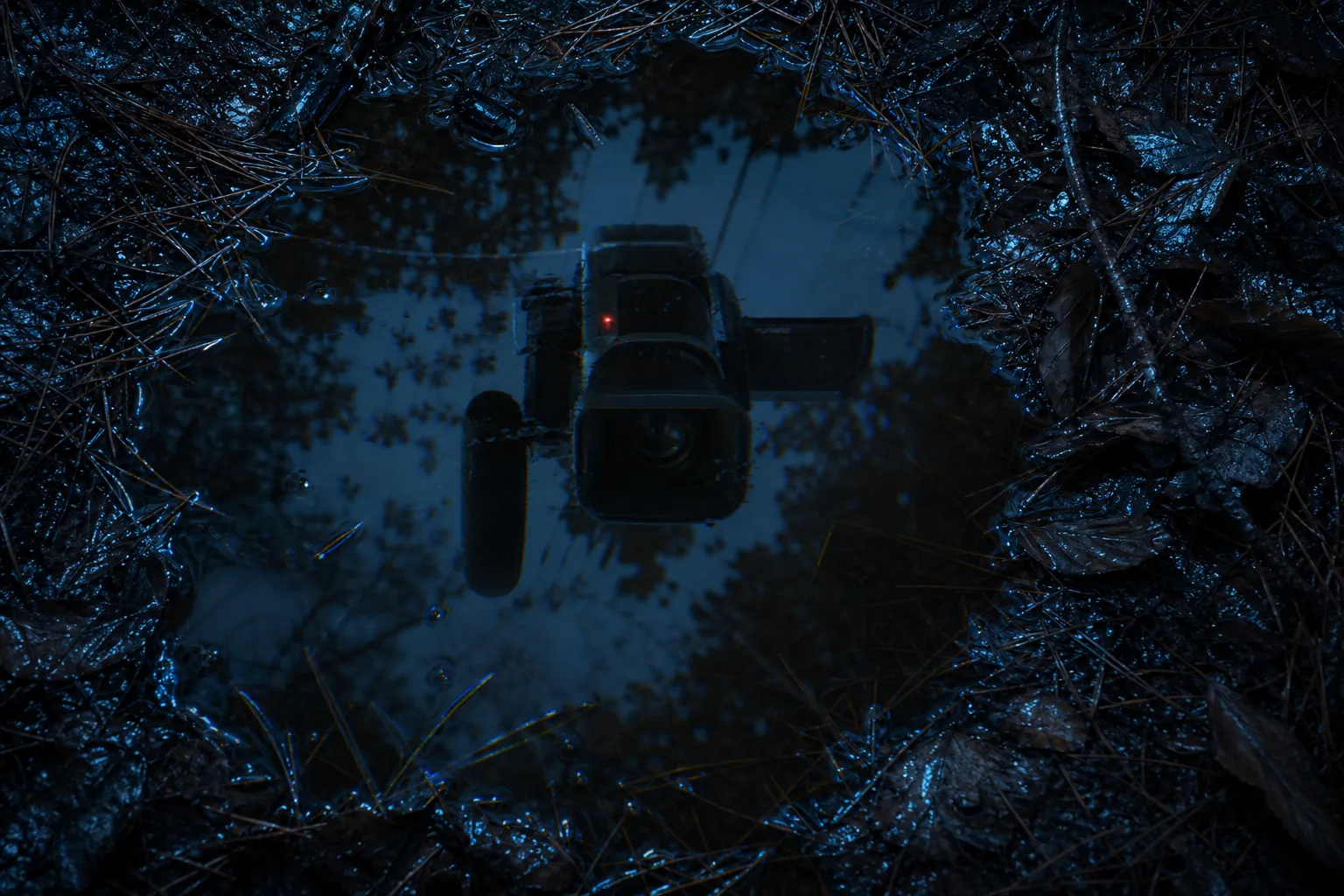
At ten minutes a single figure walked back into the clearing, picked the camera up, and turned it around. The figure was Aaron. He was wearing Ben's jacket. He looked directly into the lens and said, very quietly, tomorrow morning he's going to find this. Tell him I'm sorry. I'm the one who's going to find it first. The image cut to static. Twelve seconds of static. And then the camera came back on, filming a still puddle on the forest floor, and reflected in the puddle was the camcorder itself — still recording, held by nobody at all.
Key visual: a still puddle on the forest floor at night, the surface reflecting a 1998 camcorder filming downward — no hands, no body, just the camera.
12 — The Therapist's Note
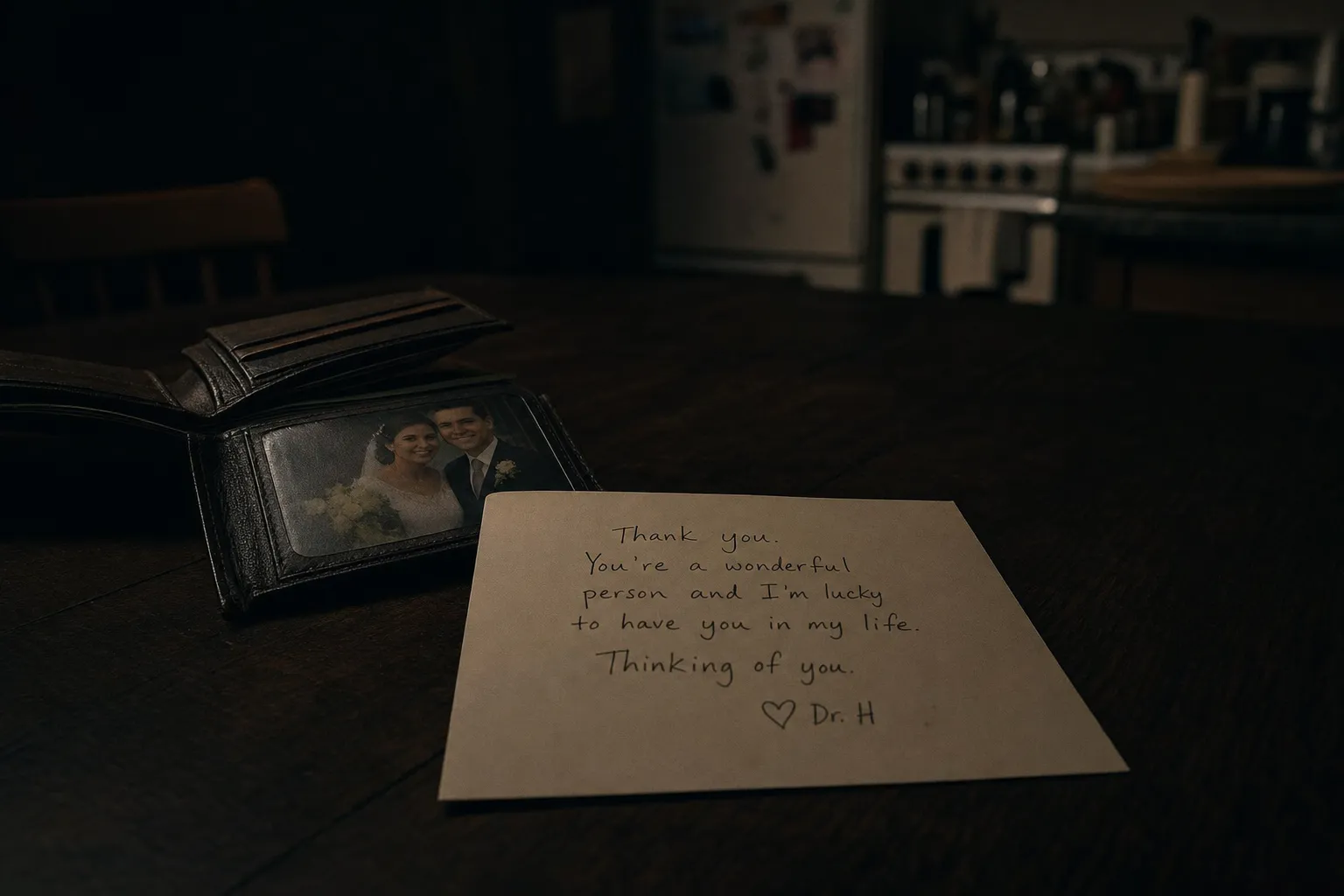
For a year, Owen had been seeing Dr. Reyes once a week for grief counseling. His wife Anna had died in a car accident the summer before. The sessions were quiet — he brought up small things, the way she'd put her keys in the same shallow bowl by the door, the way she liked her tea — and Dr. Reyes always nodded and took notes and reminded him gently that grief took time. Some weeks he cried. Some weeks he sat in silence. Around the end of the first year he started to feel something almost like lightness in the room with him.
On the morning of his first session in the second year Dr. Reyes handed him a small printed card at the door. This is the anniversary of when we started, she said. I want you to know how proud I am of how far you've come. He thanked her, put the card in the inside pocket of his coat, and walked home. That night he sat at the kitchen table and turned it over in his hands. The front was a generic thinking of you design with a watercolor flower. The back, in Dr. Reyes's careful handwriting, said: year one complete. patient is doing well. husband still believes he is the wife.
He sat with the card for a long time. He stood and walked into the bedroom and picked up the wedding photograph from the dresser. The man in the photograph was smiling. He was wearing the same jacket Owen was wearing right now. Beside him stood a woman with Owen's exact face. On the back of the photograph, in handwriting Owen did not recognize but now suddenly remembered writing, was a single word.
Key visual: a small therapy thank-you card on a kitchen table at night, the back of the card showing a single sentence in a therapist's handwriting that recontextualizes everything before it.
Twelve scripts is twelve takes. Try the one whose Key visual you can already see in your head — that's the one that will come out cleanest on the first run. If a script feels too long for the platform you're posting to, cut a paragraph; if it feels too short, run it as written and trim the video on the back end. The point is to get something finished and out the door tonight, not to write the perfect prompt.
Tags
Turn any story into a 60-second video
Story Into Video bundles image generation, animation, narration, and subtitles into one workflow. Free credits cover your first video.
Start creatingTry the tools mentioned in this article
Seedance 2 Story Video Generator
Seedance 2.0: any duration from 4 to 15 seconds, native audio, with image / video / audio reference inputs.
Nano Banana Pro Image Generator
The Gemini 3 image family — photoreal scenes, precise text-in-image and natural-language editing. Pro and Nano Banana 2 available.
Seedream 4.5 Image Generator
Seedream 4.5: story illustration, character sheets, scene concept art — with native Chinese-language prompt support.
Continue reading
12 AI Video Prompts You Can Copy, Paste, and Generate in 2026
Stop staring at a blank prompt box. Twelve AI video prompts with scene-level camera, light, and audio direction — open any one in the editor and ship it tonight.
16 min read
AI Book Trailer Maker: Turn Any Manuscript Into a 60-Second Trailer
A complete 5-step workflow for making a 60-second book trailer with AI, plus six genre formulas you can paste straight into the editor — mystery, romance, thriller, literary, fantasy, and memoir.
12 min read
AI ASMR Video Ideas: 12 Formats You Can Generate Tonight
Twelve AI ASMR video ideas you can paste straight into the editor — sensory triggers, domestic rituals, sound-prop loops, and travel scenes, each one built around a single sound and a single frame.
12 min read